

Is it just me, or does summer vacation start with ambitious plans of nostalgic 1990s style summer fun activities and end with kids who’ve forgotten how to tie their shoes while setting a new world record for consecutive days of dirty hair and cups of Goldfish? 🏆
If you’re nodding so hard your neck hurts, welcome to the club.
Let’s be real: summer parenting without a plan is like grocery shopping while hungry. It’s inevitably chaotic, potentially expensive, and you somehow end up with things nobody actually needs. (Looking at you, Costco impulse-purchased blow-up water slide.)
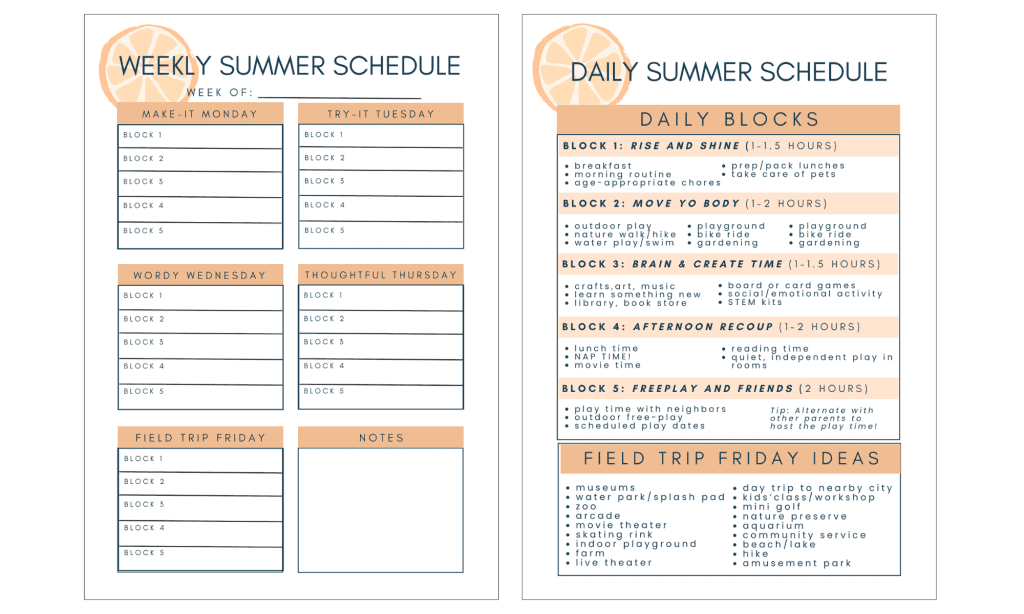
After years of summer survival mode (which often consisted of me hiding in my room, eating ranch cornnuts, scrolling Instagram while wondering if screen time limits are really that important) I’ve found something that works with both big and little kids. So today, I’m sharing a sanity-saving tool with you: THE WEEKLY SUMMER SCHEDULE FOR YOUR KIDS.
Not just any schedule, mind you. A flexible, simple, realistic summer routine that gives your kids the structure they benefit from while preserving your sanity. It’s also great for summer babysitters! It takes the pressure off them entertaining the kids all day and guarantees the kids won’t have endless screentime.
Why Your Kids (and You) Actually NEED a Weekly Summer Schedule
Before we dive into these game-changing templates, let’s talk about why unstructured summer chaos isn’t actually the carefree childhood experience we think it is.
Kids thrive on knowing what comes next. This is especially true if you have a neurodivergent kiddo. It’s like how you feel when your favorite bakery closes unexpectedly – disoriented, betrayed, and suddenly unable to function as a normal human being. (I’m still mourning you, Pearl Snap Kolaches. 😭)
Research shows that kids with some structure during the summer months…
- Retain more academic skills (bye-bye, summer slide!)
- Experience less anxiety (fewer meltdowns = less gray hair)
- Develop better independence (hallelujah!)
- Spend less time glued to screens (so long self-imposed guilt trips)
Plus, a good daily schedule means you’ll stop hearing “What are we doing today?” every 3.7 minutes, which honestly is reason enough for me.
That’s why I’ve sketched out a basic, daily summer schedule that you can tailor to your family’s wake-up time. It’s divided into 5 blocks that can be adjusted to fit your family’s needs. It’s just enough structure to give your summer some predictability and routine without making you feel tied down to the clock. If you’re a Type B like me, this one’s for you!!!
So let’s jump into the schedule!
Block 1: Rise and Shine
First up in our daily summer schedule for kids is the morning routine block. Because how the day starts pretty much determines the trajectory of the afternoon and evening.

First 1- 1.5 Hours of the Day: Morning Routine
- Rise and Shine: Feed the pets, breakfast, get dressed, brush teeth, etc.
- Morning Chores: 20ish minutes of age-appropriate responsibilities
I REALLY enjoy a slow morning routine, as do my girls. Sitting, reading, and drinking coffee in the morning is probably my favorite activity of the day. So I’ve included plenty of time for that. Let the kids enjoy a slow morning, too. Just because there are chores to do doesn’t mean there isn’t time to first enjoy a slow breakfast and play with the kitties before scooping poop out of the litter box.
Pro tips:
- Create a visual checklist for younger kids with pictures of each task.
- For tweens and teens, resist the urge to wake them before 9 AM unless absolutely necessary. The hormone-fueled creatures need their beauty sleep and trust me, NO ONE wants to deal with a sleep-deprived 13-year-old. If you don’t believe me, I’ll loan you mine for a day.
Block 2: Move Yo Body
Next up: Move your body and play. Those video games and iPad screens will win unless we set the expectation to get outdoors and move around.
I planned this block for early in the day because I live in Texas, and we are literally dying outdoors by 10 am. If this block needs to wait until evening when the summer sun isn’t melting you alive, then alter accordingly. But you’d be surprised how well a sprinkler and some lemonade can keep the kiddos cool and comfy outdoors.

1.5 Hours: Get Moving!
- Outdoor play, bike rides, sports, yard games, playground, walk the dog, etc.
- Wet Wednesday Special: Water play activities, swimming, etc.
- Field Trip Friday: Museums, splash pads, water parks, the movies, the skating rink, etc. Beat the heat and have fun all day!
An outdoor block is non-negotiable, no matter the time of day you plan it. The science is clear: physical activity improves focus, mood, and cognitive function. Sunshine gives you all that vitamin D you need for a healthy immune system. Time in nature boosts mood and reduces stress for EVERYONE. This block is for you, too, grownups!
Block 3: Brain Time (That’s Actually Fun!)
There’s no need to separate “learning time” from “creative time. They’re two sides of the same developmental coin. The goal is to make this fun, so the kids have no idea their brains are working. It’s like hiding vegetables in brownies. You can fill this block with arts and crafts and other activities from your summer bucket list.
Theming your days gives kids something specific and novel to look forward to while providing the predictability that their developing brains love. Plus, it makes it a lot easer on you to plan! Win, win for everyone.

1.5 Hours: Brain and Create Time:
- Make-it Monday: Extended craft, art project, or DIY Building project. (I love Kiwi Kits for this! My dad has been doing these with all the grands, and it’s been a great bonding and creative activity that’s minimal prep.)
- Try-It Tuesday: Learn about something new, then try it! (think recipes, art techniques, gardening, coding, sewing skills, etc.)
- Wordy Wednesday: Reading adventure day! This is a great time to head to your local library or used bookstore. Join a reading challenge at your local library, Half Price Books, Barnes and Noble. You can find a full list from Money Saving Mom. You can also incorporate language-based games for older kiddos, like Scrabble, Bananagrams, Scattergories, etc.
- Thoughtful Thursday: Community service planning and creation (create cards, make a meal for someone, etc). Social-emotional learning is just as important as skills learning. Having a specific time each week to focus on this is integral to growing emotionally-healthy humans.
- Field Trip Friday: Need I say more? If you’ve got littles, you might want to start wrapping it up, and heading back home for the next block. (My favorite!)
Block 4: The Afternoon Sanity Recoup
It’s time for lunch and a mandatory decompression time (aka nap time). Besides morning coffee time, this might be my favorite block of the day. Also known as iced coffee hour.

1+ Hours: Refuel and Recoup
- Lunch (pro tip: let the big kids make it and clean up!)
- Rest/Quiet time (for EVERYONE)
Eat a quick lunch and relish some rest time. If your kiddos are past the napping stage, encourage them to do some quiet activities wherever you prefer.
This is when I choose to pull out the screen time. If I want some guaranteed quiet to read a book or get some writing done, I know I’ll get fewer interruptions if they can watch a movie or play some Roblox. But you do you, and what’s best for your family.
Block 5: Free Play with Friends
If you’re lucky enough to live in a neighborhood with kids or can easily rotate play dates with friends, then this block that combines socializing with free play is easy and so good for kids’ develpment.

2+ Hours: Free Play and Social Time
- Unstructured indoor or outdoor play with minimal parental helicoptering (ahem)
- Friend time (playdates, neighborhood activities, etc.)
- Solo hobby exploration
This is where the real childhood memories happen. Remember running through sprinklers with neighborhood kids until dinner? Making mud pies in the backyard? Recording cassette tapes full of your own original songs? (Just me?) This is that block. It’s a non-negotiable, magical time when kids can let loose their creativity, learn negotiation skills, conflict resolution, and creative problem-solving.
Putting It All Together (Without Losing Your Mind)
Now for the moment of truth: how to implement this schedule without becoming the summer drill sergeant your children will complain about to their future therapists.
1. Print it out and display it prominently
Stick on the refrigerator, not buried in a drawer of good intentions next to the Jillian Michaels Yoga Meltdown DVD your postpartum self bought back in 2010.
2. Use verbal or visual cues for transitions
Maybe it’s a timer, or silly song or dance that signals “It’s time for the next thing!”
This doesn’t have to be hard and fast. If your ADHD kid is hyperfocused on a science project, if it’s possible, let them finish. But if it’s absolutely necessary to transition, don’t just spring it on them and exepct them to obey immediately. As a mom of a kid who STRUGGLES with transitions, I give multiple heads-ups, especially if we have to leave the house at a specific time or are expecting company.
And be sure to offer praise when they do transition well. It’s something to celebrate!
3. Build in flexibility
This is a FRAMEWORK, not prison. The best summer schedule is one that is realistic. Some days you’ll nail every block. Other days, you’ll abandon ship by 10 AM and have a movie marathon. Both are fine! I’m naturally a fly by the seat of my pants kind of person, so adhering to a summer daily routine is TOUGH for me. I have to give myself some grace and know that it’s not always gonna happen, and that’s totally ok.
If you don’t want to start full-out, maybe just have 2 days a week of schedule and the leave the rest open to whatever. You know yourself and your kids best, so do what works.
4. Prep the day before
Make a Michaels order for those craft supplies, pack bags for outings, and generally become the overnight summer fairy your post-late-night Netflix marathon zombie self will thank you for.
5. Lower your standards considerably
That Pinterest craft will not look like the picture, no sirree. Your zoo field trip in the 95 degree heat might will likely end with ice cream bribes. Your child might take pool baths 8 days in a row. IT’S ALL FINE.
The real goal here isn’t perfect summer productivity. It’s finding the balance between structure and freedom where kids thrive, and parents maintain just enough sanity to make it to mid-August.
Remember, the most important thing isn’t checking every box on the schedule. It’s being present enough to notice when your kid makes up a ridiculous new dance move, builds something amazing with sticks in the backyard, or suddenly wants to tell you about their elaborate fantasy world while helping with dinner prep. Above all else, it’s minimizing the screentime and encouraging kids to experience the world and use their imaginations.
What summer scheduling hacks have saved YOUR family? Drop them in the comments because we’re all in the sweaty, popsicle-stained trenches together!